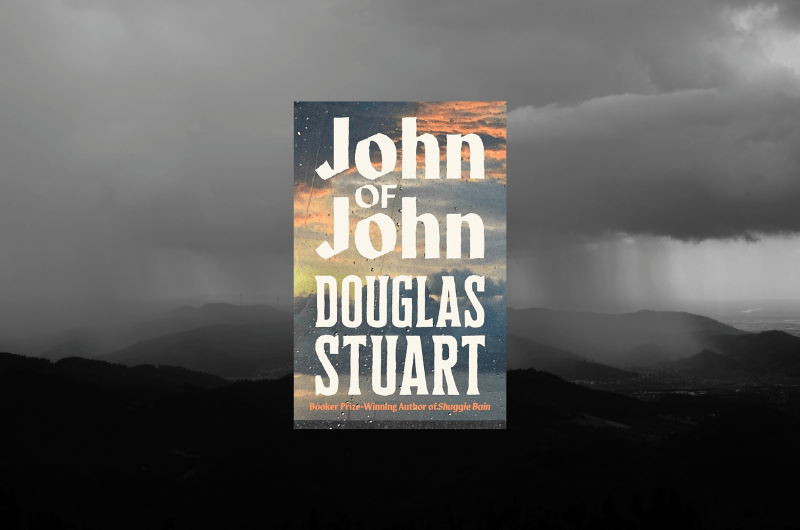
Douglas Stuart’s third novel is nothing short of a triumph.
Cal returns to Harris, in the Scottish Islands, after studying in the mainland. His father, John, encourages his return after claiming Ella, Cal’s grandmother, is ill. Cal was reluctant, but sofa surfing and unemployment was taking its toll, so he agreed.
The father-son duo have a emotionally stagnant relationship. John is traditional and values his place in the intimate community of their small town. Cal has spent the previous years exploring his sexuality and breaking away from constraint. Their reunioin causes immediate friction as Cal is far from the ideal son John expects him to be.
With an unclear direction, Cal tries to adjust back to island life. He reconnects with old friends and battles his father’s criticisms. Ella, who lives under the same room, often acts as a bridge between the two and is a safe presense for Cal.
As life on Harris continues, will Cal find a place in the town he used to call home?
Unsurprisingly, Stuart’s character-writing ability shines brighter than ever in his new novel. When writing a small community and disfunctional families, it can be easy to fall into predictable archetypes. However, In John of John, each person paints a picture of a long lived life, of which we just get a gimpse into. Cal’s internal conflicts result in a seamless conflict between him and his father, his future, and his relationships. John is harbouring more weight than the reader is initially privy to. The small and intimate moments we spend with him opens our eyes to the heart of this story.
The pacing is natural and never relies on cheap subversions and gear changes to create impact. Every chapter is treated with great care and it’s easy to forget you’re reading a fiction.
There are a number of fascinating themes covered in the novel, often with Cal acting as the contrasting element. Cal and tradition. Cal and expectation. Cal and love.
The small fictional town set in Harris is host to many charming and troubled characters. Cal often has a friendly relationship with his townspeople, still allowing him to escape from just being John’s son. He endevours on a risky trip with his father’s best friend, where many buried emtions finally begin to surface.
Douglas Stuart never gives himself an easy task with his novels. Many writers would fumble if presented with the same outline. The results would be boring, lazy, or overwritten. But Stuart knows exactly where the heartbeat of a story lies. The journey to finding that beat is always so incredibly thoughtful and tender.
John of John was a pleasure to read. I wont forget it.
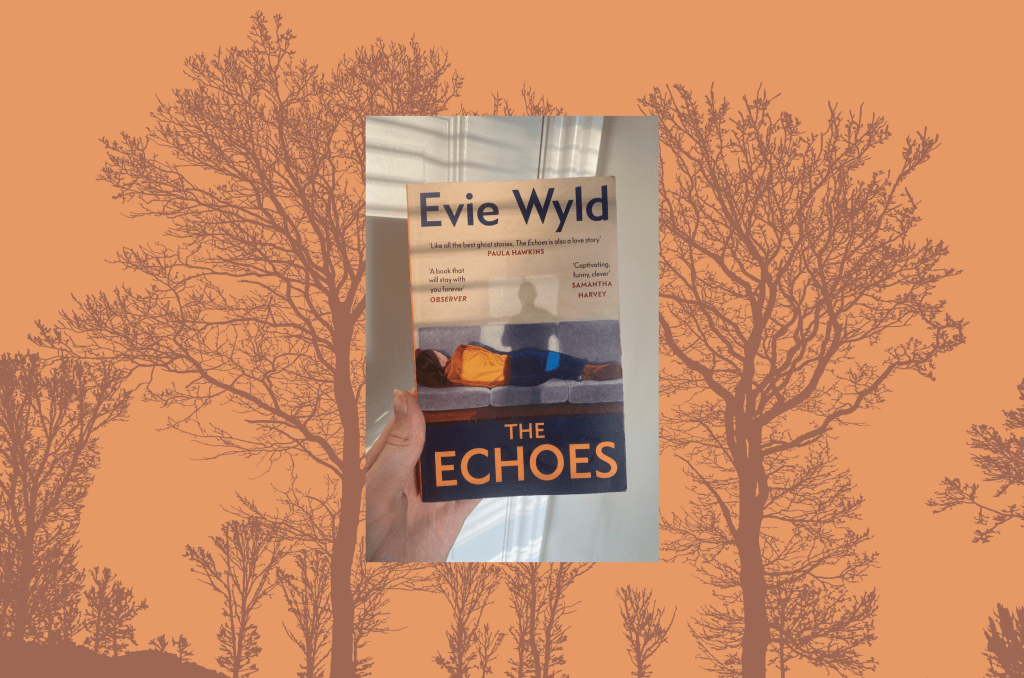
Hannah lived in The Echoes, hidden within the Australian outback. After escaping to London, the echoes of her childhood still haunt her, as does the ghost of her dead boyfriend.
This fascinating character exploration of the curious and troubled woman, Hannah, is written from three main perspectives:
After – The dead boyfriend, Max, watching her live on in their apartment.
Before – The build-up to Max’s death, written from Hannah’s perspective.
Then – A third-person perspective of Hannah’s secretive childhood.
Sprinkled along the way are independent chapters for another significant character at the time.
The structure of this novel had me questioning what story was being told here. But my worries were soon squandered as Wyld began to paint a beautiful and tragic picture of a troubled family and one girl’s desperate attempt to distance herself far away from the past.
Max was often left in the dark in regards to Hannah’s past. So when we read from his ghostly perspective, we get to see the Hannah that she herself wanted to become. Evie Wyld does an amazing job of writing as a ghost. It’s not gimmicky or cheesy; it instead works poignantly and creates a perfect melancholy that stays with you throughout the novel.
Hannah was a curious and innocent young girl who looked up to her beloved sister Rachel. As Rachel grows older and eventually finds herself in the centre of a family-shattering and traumatising incident, Hannah frequently finds herself to be a ghost in her own family home.
Her past and her present perform a perfect dance with one another throughout the entire novel. Slowly, each move falls into place and creates a mesmerising routine. This is character writing at its best. The person Hannah became, the reasons she left and distanced herself from her family, make so much sense. A perfect yet tragic puzzle.
In the Before, we see Hannah at what can only be assumed to be her happiest. She may have given up her dreams and not be in the ideal place that society demands a woman of her age to be, but she and Max have a beautifully real relationship. They argue. Sometimes it’s stupid and sometimes it’s serious; however, their love is clear and it’s written with grace. This is how you write a relationship.
The Echoes is atmospheric and mysterious. Hannah is the story, and Max helped her become the brilliant and strong woman we learn her to be. She did not have an easy childhood, nor did many members of her family, but she lived on as one must. That’s brave and that’s beautiful.
In a story about a ghost, secrets, and family history, it’s the tale of Max and Hannah’s love that you’ll keep in your heart and protect as long as you can. Evie Wyld achieved so much in just over 200 pages. What an incredible novel.
This novel is more than just a story. If anything, it’s a break between the tales of all the wondrous and troubled characters we meet. It’s a moment of breath between the chaos.
Dokgo, a homeless man who has completely lost his way in life, including all his memories, stumbles upon a job in a struggling convenience store after helping the owner. He meets the colourful cast of colleagues, some more accepting of him than others, but he somehow shares his mysteriously wise wisdom on each and every one of them. He makes you rethink your expectations of life, and he helps you take a step back and take a moment to pause.
We also meet a select few regulars who rely on the convenience store during their busy and chaotic lives. This novel makes you think about the stories of every stranger you pass by on the street, every person you see in the shop. Everyone has a stroy, and Dokgo was not afraid to help anyone, he is an inspiration.
Albeit, he does have his problems. As his unclear past begins to take shape in his memory, we learn that he himself did not lead a perfect life. But this job and this store has enabled him to heal and rethink what kind of man he wants to be.
Mrs.Yeom, the warm and kind store owner is the sort of person everyone needs in their life. She is compassionate and chooses to see the good in those others turn away from. As a character, she grounds the reader in the story and provides a relatable point of view.
Kim Ho-Yeon writes with such magic and intrigue that even the darker moments feel like a dream world. He instills a new sense of hope within the reader as they begin to turn the last pages.
Everyone has a story to tell and everyone deserves a shoulder to cry on.
The Last Chance Convenience Store won’t be published in English until Summer 2026. I may have to learn Korean just so I can read it sooner!
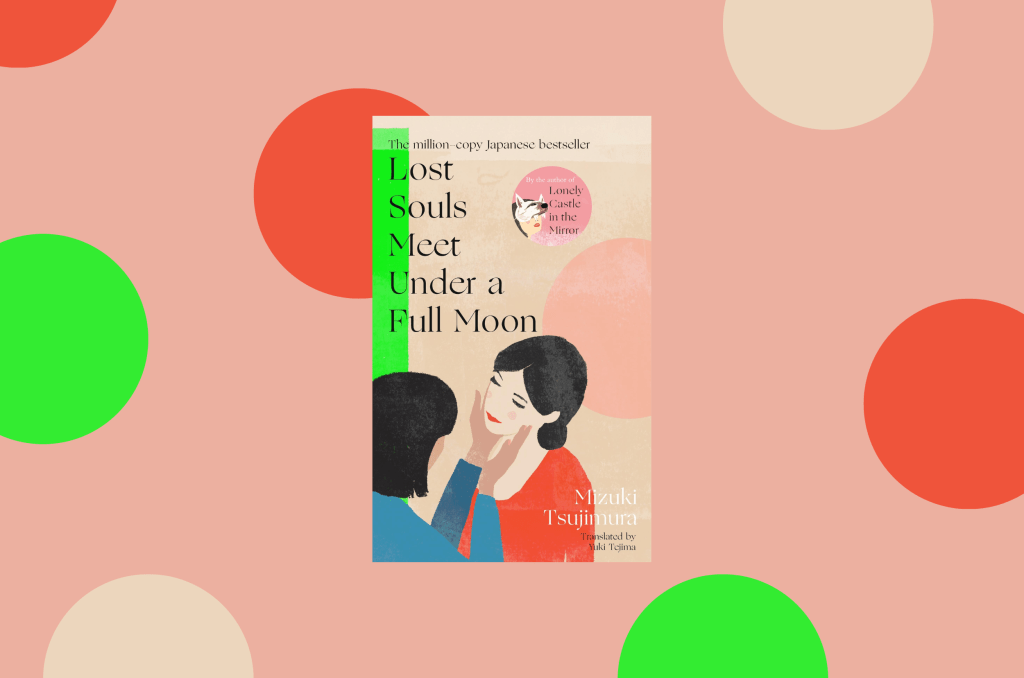
Lost Souls Meet Under a Full Moon, Mizuki Tsujimura
“Being a witness to a person’s pain isn’t something you can do half-heartedly.”Lost Souls Meet Under a Full Moon, Mizuki Tsujimura
If you could have one last conversation with someone who has died, who would it be and what would you say? This is the question asked by Mizuki Tsujimura in the concept of her latest translated novel.
She explores a variety of different characters with different lives, regrets, and stories in which they are all presented with this exact opportunity. Each character meets Ayumi, a 17-year-old highschool student who introduces himself as the ‘Go-Between.’ It’s his job to set up the meeting between the living person and the deceased person they have requested to see.
I’ve read from others that there are many comparisons to be made between Lost Souls Meet Under a Full Moon and other magic-realism Japanese novels such as Before The Coffee Gets Cold and The Curious Kitten at the Chibineko Kitchen. Surprisingly, I have yet to read these supposedly similar titles, therefore I cannot comment on the originality of this book. However, a novel’s excellence is determined only half by its idea, if that, and more so by its execution. So whilst many have written that Mizuki Tsujimura brought nothing new to the table with this book, I would argue that what she did bring was utterly delicious.
The first four chapters each follow a different character. Each one desires to talk to someone who has died, and either by chance or by pure determination, they are able to contact the Go-Between.
A lonely woman wishes to meet with a recently passed celebrity who brought her light in her life of darkness.
A stubborn, unloving father wishes to meet with his mother, shifting his perspective.
A school girl wishes to meet with her best-friend turned bitter rival, not sure to expect.
A heartbroken man wishes to meet with his fiance in search of answers.
Wildly different circumstances surround each of these people. We get an insight into their past, often seeing the relationship they had with the person they’ve requested to meet. And then their meeting is the conclusion and crescendo of the story that has been built up along the chapter. Each chapter is unique and full of intrigue, proof that Tsujimura is truly skilled at writing dynamic, fascinating characters.
I’d specifically like to focus on Chapter 3, The Rule of the Best Friend. This chapter introduces us to Arashi, the most morally ambiguous of the people we meet. We learn of the precious relationship she had with Misono, Tsujimura perfectly captures the magic and nostalgia of childhood friendship. However, as their relationship turns sour, Arashi decides to process her rage in quite a questionable turn of events.
I’ll spare you the details, and the spoilers, but in short Arashi requests to meet with Misono and it doesn’t exactly go as planned. This chapter is the most different of outcomes from the Go-Between meetings, showing how this power does not always result in closure or hope. Tsujimura encourages the reader to think about regret. Can we bury our secrets? Or is the ever-festering stain of regret going to continue growing throughout your heart until you just can’t take it anymore. Speaking with the dead can’t heal the actions of our past.
We read more about the morality of the whole system in the fifth chapter, The Rule of the Go-Between. As a refreshing and somewhat unexpected prolonged conclusion to this novel, we learn more about Ayumi and his role as the Go-Between. This was my favourite chapter. Ayumi and his family are brilliant characters, their story undertone by a sense of darkness and mystery. Essentially this final chapter is all four previous chapters written again, but from Ayumi’s perspective. That is a bold, risky move on Tsujima’s part. Reading a slightly different repeat of everything you’ve just read could easily be boring and bland. However, it was absolutely fascinating to get an insight into what was going on behind the scenes, and learning all about Ayumi and what he was thinking during these chapters. Tsujimura doesn’t needlessly repeat information, she is able to find something new in every story. It made me want to read it all over again with a new perspective. The ability to re-read a novel and bring something new out of it is a true testament to great writing.
“If dead people are just that – dead – and they don’t have souls, or they’ve just moved on and are resting in peace, isn’t it selfish of the living to want to see them again?” Ayumi often found himself questioning the purpose of the work he did. Is it the right of the living to bring back the dead for the benefit of themselves? Are we not supposed to leave them in peace? He raises plenty of valid concerns about the role he has been asked to play, adding a new layer of complexity and morality to this wonderfully thought-provoking novel. With his constant uncertainty, he learns more and more about the role, and the importance it has in his family’s history, all whilst questioning if he himself wants to meet with someone that’s passed away.
There’s a lot to unpack in his amazingly constructed story, but I wouldn’t want to deprive you of the opportunity of reading his chapter for the first time yourself.
It’s brilliant, tragic, and thought-provoking.
September 2025 will see the publication of the translated second-installment to the Go-Between series, and I cannot wait. I could read the tragic, layered, complex lives of the characters written by Tsujimura for eternity, and never be bored.
“As we count up the memories from one journey, we head off on another. Remembering those who went ahead. Remembering those who will follow after. And someday, we will meet all those people again, out beyond the horizon.” – The Travelling Cat Chronicles, Hiro Arikawa
Japanese translated novels with ‘cat’ in their title/cover often fall into a box of ‘cosy literature.’ At first glance, this is good. By being pushed into this sub-genre, these novels have attracted large numbers of attention from readers across the globe. However, this box has also restricted titles such as The Travelling Cat Chronicles, The Cat Who Saved The Books, and many more, as they often become perceived as nothing more than cute and gimmicky.
So when I read The Travelling Cat Chronicles, which surprisingly took me a while to get around to, I was so pleased that Hiro Arikawa had written something that completely transcends those perceptions. Not that I had any doubt having read Arikawa’s wonderful 2023 novel The Goodbye Cat.
The premise is simple but fascinating. Satoru and his beloved cat Nana travel all across Japan, from the foreboding coast to the iconic Mt.Fuji, on a mission to find Nana a new home. Satoru visits old friends from all over the country to find the best possible home for Nana. With each visit we learn about Satoru’s relationship with the current friend he’s meeting. Arikawa takes us on a trip down memory lane as we learn of the hardships Satoru faced growing up and how his pure soul and unrelenting kindness lead to him becoming a light in his friends lives.
When asked why he must give Nana away, Satoru dodges the questions. But we know it must be something big for this cat-loving man to say goodbye to his precious pet. Speaking of which, Nana is not only Satoru’s cat, but a well-developed character in his own right.
With many passages written from his perspective, Nana is a perfectly agreeable and whimsically sarcastic depiction of a cat. He was taken in by Satoru as a stray, and we learn early on that Nana resembles a childhood cat of his, Hachi. We learn more about Hachi and his importance in Satoru’s life in his discussions with his childhood friend Kosuke. I’ll leave you, the reader, to dive into that beautifully heart-aching story.
Whilst, in a way, the story-telling is repetitive, that’s not a drawback to this novel. The structure repeats itself, Satoru and Nana visit a friend, we learn about a story between them from the past, and for whatever reason it’s decided that Nana can’t stay there. This happens three times, with a small chapter ‘3.5’ that follows the owner-pet-pair as they drive by Mt.Fuji. The writing here shows how Arikawa is able to capture the essence of the human heart in its finest form. With this said, the repetitive structure actually acts as a strong base for Arikawa to thrive in writing awe-inspiring small tales from the past, rich in character and emotion. You’re never bored.
The ending is worthy of a whole novel itself. Arikawa handles it with class, gentleness, and beauty. Every sentence pulls at your heartstrings and each page paints vivid images.
One of the strongest skills of Hiro Arikawa is her ability to write moments that are surrounded by sorrow and heartache, and yet somehow, still leaving the reader with a feeling of lingering hope and quiet warmth.
With The Passengers on the Hankyu Line only a couple months away, reading this novel has raised my anticipation higher than I thought it could go. Stay tuned for my review on that one!


 The Pear Book