Lost Souls Meet Under a Full Moon, Mizuki Tsujimura
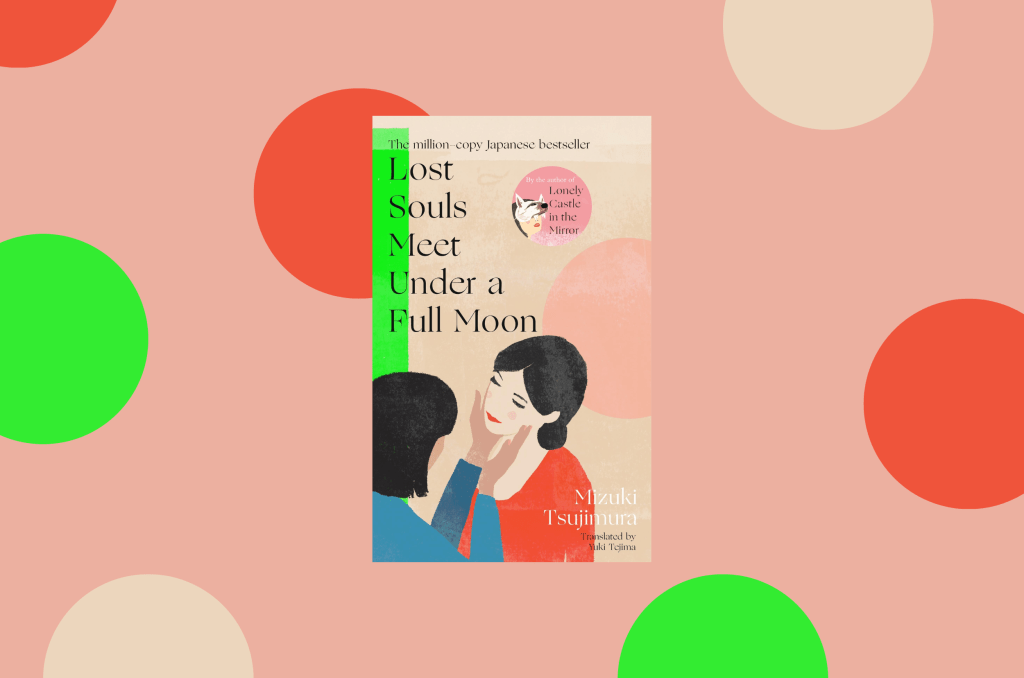
“Being a witness to a person’s pain isn’t something you can do half-heartedly.” Lost Souls Meet Under a Full Moon, Mizuki Tsujimura
If you could have one last conversation with someone who has died, who would it be and what would you say? This is the question asked by Mizuki Tsujimura in the concept of her latest translated novel.
She explores a variety of different characters with different lives, regrets, and stories in which they are all presented with this exact opportunity. Each character meets Ayumi, a 17-year-old highschool student who introduces himself as the ‘Go-Between.’ It’s his job to set up the meeting between the living person and the deceased person they have requested to see.
I’ve read from others that there are many comparisons to be made between Lost Souls Meet Under a Full Moon and other magic-realism Japanese novels such as Before The Coffee Gets Cold and The Curious Kitten at the Chibineko Kitchen. Surprisingly, I have yet to read these supposedly similar titles, therefore I cannot comment on the originality of this book. However, a novel’s excellence is determined only half by its idea, if that, and more so by its execution. So whilst many have written that Mizuki Tsujimura brought nothing new to the table with this book, I would argue that what she did bring was utterly delicious.
The first four chapters each follow a different character. Each one desires to talk to someone who has died, and either by chance or by pure determination, they are able to contact the Go-Between.
A lonely woman wishes to meet with a recently passed celebrity who brought her light in her life of darkness.
A stubborn, unloving father wishes to meet with his mother, shifting his perspective.
A school girl wishes to meet with her best-friend turned bitter rival, not sure to expect.
A heartbroken man wishes to meet with his fiance in search of answers.
Wildly different circumstances surround each of these people. We get an insight into their past, often seeing the relationship they had with the person they’ve requested to meet. And then their meeting is the conclusion and crescendo of the story that has been built up along the chapter. Each chapter is unique and full of intrigue, proof that Tsujimura is truly skilled at writing dynamic, fascinating characters.
I’d specifically like to focus on Chapter 3, The Rule of the Best Friend. This chapter introduces us to Arashi, the most morally ambiguous of the people we meet. We learn of the precious relationship she had with Misono, Tsujimura perfectly captures the magic and nostalgia of childhood friendship. However, as their relationship turns sour, Arashi decides to process her rage in quite a questionable turn of events.
I’ll spare you the details, and the spoilers, but in short Arashi requests to meet with Misono and it doesn’t exactly go as planned. This chapter is the most different of outcomes from the Go-Between meetings, showing how this power does not always result in closure or hope. Tsujimura encourages the reader to think about regret. Can we bury our secrets? Or is the ever-festering stain of regret going to continue growing throughout your heart until you just can’t take it anymore. Speaking with the dead can’t heal the actions of our past.
We read more about the morality of the whole system in the fifth chapter, The Rule of the Go-Between. As a refreshing and somewhat unexpected prolonged conclusion to this novel, we learn more about Ayumi and his role as the Go-Between. This was my favourite chapter. Ayumi and his family are brilliant characters, their story undertone by a sense of darkness and mystery. Essentially this final chapter is all four previous chapters written again, but from Ayumi’s perspective. That is a bold, risky move on Tsujima’s part. Reading a slightly different repeat of everything you’ve just read could easily be boring and bland. However, it was absolutely fascinating to get an insight into what was going on behind the scenes, and learning all about Ayumi and what he was thinking during these chapters. Tsujimura doesn’t needlessly repeat information, she is able to find something new in every story. It made me want to read it all over again with a new perspective. The ability to re-read a novel and bring something new out of it is a true testament to great writing.
“If dead people are just that – dead – and they don’t have souls, or they’ve just moved on and are resting in peace, isn’t it selfish of the living to want to see them again?” Ayumi often found himself questioning the purpose of the work he did. Is it the right of the living to bring back the dead for the benefit of themselves? Are we not supposed to leave them in peace? He raises plenty of valid concerns about the role he has been asked to play, adding a new layer of complexity and morality to this wonderfully thought-provoking novel. With his constant uncertainty, he learns more and more about the role, and the importance it has in his family’s history, all whilst questioning if he himself wants to meet with someone that’s passed away.
There’s a lot to unpack in his amazingly constructed story, but I wouldn’t want to deprive you of the opportunity of reading his chapter for the first time yourself.
It’s brilliant, tragic, and thought-provoking.
September 2025 will see the publication of the translated second-installment to the Go-Between series, and I cannot wait. I could read the tragic, layered, complex lives of the characters written by Tsujimura for eternity, and never be bored.
 The Pear Book
Leave a comment