One Hundred Flowers, Genki Kawamura
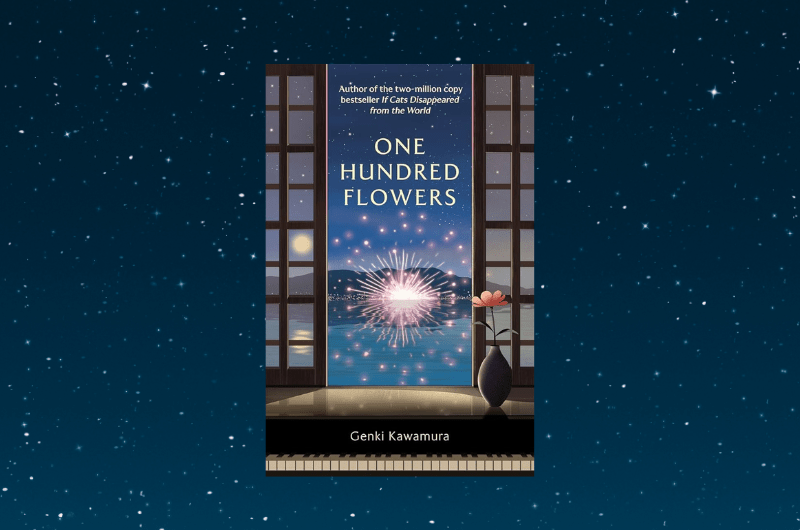
I was so excited to read this book because of my love for If Cats Disappeared from the World. My expectations were certainly met, but not in the way I thought.
This novel is quite different from his previous. Whilst If Cats Disappeared from the World is a sad tale told with magic and whimsy, One Hundred Flowers tells an equally heart-wrenching story while remaining wholly in the real world.
One thing is for certain, Genki Kawamura writes families beautifully. In this novel, our male protagonist (Izumi) is juggling married life, his career, and having a baby on the way, all whilst his mother (Yuriko) is succumbing to the effects of her dementia. He finds himself having to keep a much closer eye on her.
A large part of the novel surrounds the mysterious year in which Yuriko disappeared and abandoned Izumi when he was just a teenager, before suddenly returning. The two of them never spoke about that year again. As expected, this caused a rift in their relationship that never fully healed.
Now, years later, the two are being forced to remember and reminisce on the past as Yuriko starts to lose her memory. Izumi finds himself giving a home to the memories his mother can no longer store in her heart. He learns more about her past through discovering Yuriko’s old diaries, and remembering moments of his childhood that had long before been forgotten.
Izumi and his wife Kaori are attempting to live life as best they can in their demanding, fast-paced jobs. Kaori is not letting her pregnancy get in the way of her career, working until the last possible moment she has to stop. With Yuriko’s decreasing health, the two are having to ask questions and face difficult truths about their present and future.
The complicated maze of life is evident throughout this novel. But Genki shows how we can often find refuge in our memories. Memories can be intimate and personal, but in Izumi’s case, he finds himself discovering and sharing memories with his mother, developing a new perspective on his life and his childhood.
This is a beautifully written story with exceptional character development. Every page jumps to life with relatability and clarity. Genki Kawamura encourages the reader to reflect on their own memories and their own family.
The imagery of the semi-circle fireworks is stunning and original, and a great constant theme throughout. It represents the way that memories are only ever going to be half your own, whilst the rest of a memory is reflected in the lives of those around you and the memories you share. Memories and relationships are complicated, but love is always there, in lots of different ways.
 The Pear Book
Leave a comment